
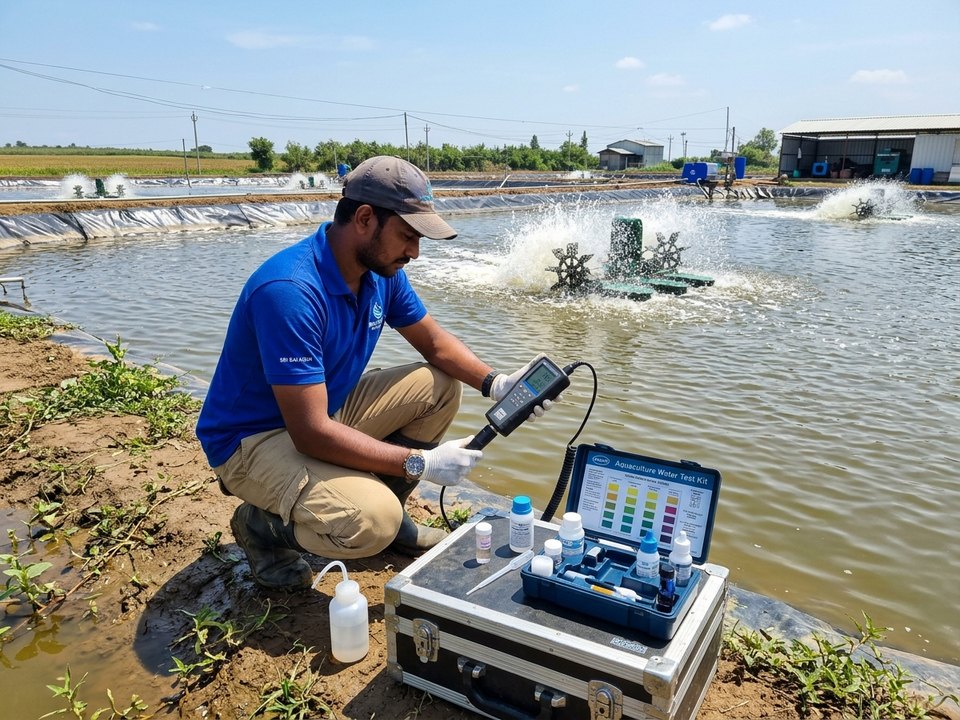
Why regular measurements, trends and timely action matter more than judging pond water by colour alone.
Water quality is not a one-time preparation task. It changes with weather, feeding, shrimp biomass, plankton, pond-bottom condition, water source and management actions. A pond that looked stable yesterday can behave differently after a cloudy day, heavy rain or a sudden change in feed consumption.
Colour and smell can offer clues, but they are not substitutes for measurement. A consistent monitoring routine helps the farm spot a trend early, discuss it with a technician and avoid reacting to guesswork.
Measure parameters that guide decisions
Commonly monitored parameters include dissolved oxygen (DO), temperature, pH, salinity, alkalinity and nitrogen-related indicators such as total ammonia nitrogen and nitrite. Frequency depends on crop stage, stocking density, system design, weather and recent pond behaviour.
Published guidance includes reference ranges, but these should not be treated as universal targets for every pond or as a substitute for current local advice. ICAR-CIBA farm record materials provide practical reference values, while regulatory guidelines set relevant environmental standards and limits.
Pay particular attention to dissolved oxygen
Dissolved oxygen can change through the day as shrimp, plankton and other organisms use oxygen while photosynthesis and aeration affect availability. Early-morning readings matter because DO can be lower after a night without sunlight. During high-risk periods, follow the farm’s monitoring plan and check at additional times as advised.
If DO falls or shrimp show abnormal behaviour, do not wait for the next routine reading. Check aerator operation and power supply, inspect shrimp behaviour and water conditions, reduce feeding when appropriate, and follow the farm’s emergency response plan. Consider the trend and shrimp condition, not one number alone.
Track pH, alkalinity and salinity together
pH can vary between morning and afternoon, particularly when plankton activity is strong. Alkalinity influences buffering capacity, while salinity changes may follow rainfall, evaporation, water exchange or source-water differences. Measuring these together provides a more useful picture than treating each value in isolation.
Avoid applying lime, minerals, probiotics or other products solely because a reading is outside a preferred range. Confirm the measurement, understand the likely cause and consult a qualified adviser about the suitable material, dose and timing.
Watch ammonia, nitrite and pond-bottom condition
Feed waste, faecal matter and other organic material contribute to nutrient loading. Poorly managed accumulation can affect bottom condition and water quality. Monitor ammonia and nitrite according to the farm’s plan, particularly when biomass and feed input increase or shrimp behaviour changes.
Check areas where feed is offered and note blackened sediment, unusual odour or other changes. Record observations and act with technical guidance. Avoid sudden, large water exchanges without assessing source quality, biosecurity risk and discharge arrangements.
Use a trend log, not scattered readings
Record date, time, pond ID, crop day and test method; enter actual readings rather than only “normal”; note rainfall, cloud cover, feed changes, aerator issues and shrimp behaviour; maintain meters as instructed; and record the action taken and whether later readings improved.
Treat water source and discharge as part of management
Reservoirs and managed intake systems can help farms control what enters a pond. Water exchange should not be an automatic response to every problem; source quality, disease conditions nearby, treatment and discharge impacts must be considered. Manage wastewater and pond sludge responsibly and follow applicable CAA guidelines.
Field takeaway
Measure, record, compare and then act. A reliable trend log gives farmers and technicians a stronger basis for decisions than colour or memory alone.
A practical daily monitoring note
Record pond ID, date and time, DO, temperature, pH, salinity, relevant additional tests, feed offered and tray observations, weather, shrimp behaviour, aeration status and action taken. The record is valuable when readings are consistent and reviewed.
- ICAR-CIBA – Shrimp culture and disease management manual
- ICAR-CIBA – Shrimp crop insurance farm record book
- CAA – Standards