
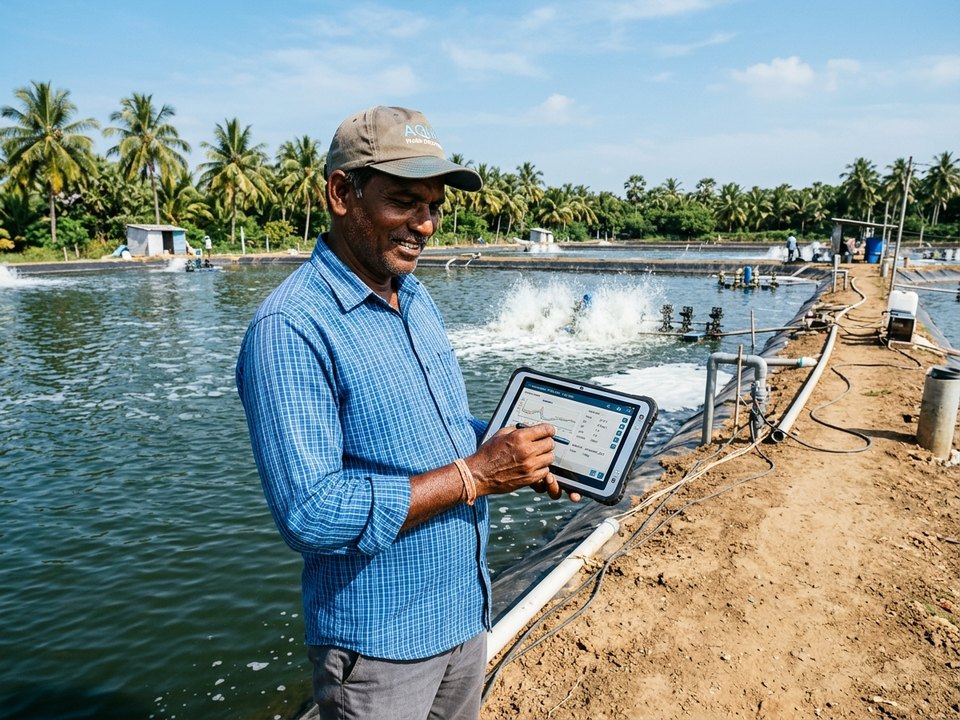
Farm records connect seed, inputs, management decisions and harvest into a reliable crop history.
Traceability is often associated with export documentation, but the foundation is built at pond level. A farm should be able to explain where seed came from, what feed and inputs were used, how the crop was managed and where the harvested shrimp went.
If this information is scattered across notebooks, invoices, phone messages and memory, it becomes difficult to answer questions quickly. A simple, consistent record system is more useful than a complicated format nobody updates.
Start with a clear identity for every pond
Use a consistent farm and pond identification system. Record registration or enrolment details relevant to the operation, pond area, crop start date, species, stocking quantity, hatchery and seed batch. If there are multiple stockings or partial harvests, make each event clear.
Keep input records linked to the crop
Record seed supplier, hatchery, batch, documents, quantity, date and pond; feed brand, size, batch or lot, quantity received and used; other inputs and their reason for use; water and pond-management readings; health observations and actions; and harvest date, quantity, buyer and sale or dispatch details.
Make records useful, not just complete
A record should answer practical questions. Did feed consumption change before growth changed? Which seed batch was stocked in this pond? What products were used before harvest? Which buyer collected the harvest? Consistent records allow the farm to compare crops and investigate differences rather than relying on memory.
Record important actions close to the time they happen. If a correction is needed, make it transparently rather than silently overwriting the original information.
Understand MPEDA enrolment and export traceability
MPEDA’s farm-enrolment information states that enrolment is used for traceability of produce from export-oriented aquaculture farms and that farms must maintain records of inputs, production and disposal or sale. Export-oriented farms should review the current enrolment process and conditions. Registration with one authority does not automatically replace every other applicable registration or enrolment.
Keep documents retrievable
Store records in organised physical files, digital folders or both. Use clear filenames and back up digital records. Keep invoices, laboratory reports, seed documents, input labels and harvest records linked to the relevant farm, pond and crop. Follow the retention period required by applicable law, buyer, scheme or programme; verify current requirements rather than relying only on an old checklist.
Traceability helps farmers as well as buyers
Good records can help review production costs, prepare for buyer questions, support an insurance discussion and identify management patterns across crops. They do not guarantee a claim, certification or export acceptance, but they make it easier to present a clear and consistent account.
Field takeaway
If a farm cannot connect its seed, inputs, crop management and harvest through records, traceability becomes difficult. Start with a simple pond record and maintain it every day.
Minimum crop file
Keep the applicable farm registration or enrolment details; pond ID, area and crop dates; seed source and health documents; feed and input records; water-quality, health and management logs; harvest quantity, buyer and sale/dispatch records; and relevant invoices, laboratory reports and correspondence.
- MPEDA Farmers – Enrolment of Farms
- MPEDA – Better Management Practices
- ICAR-CIBA – Shrimp crop insurance farm record book