
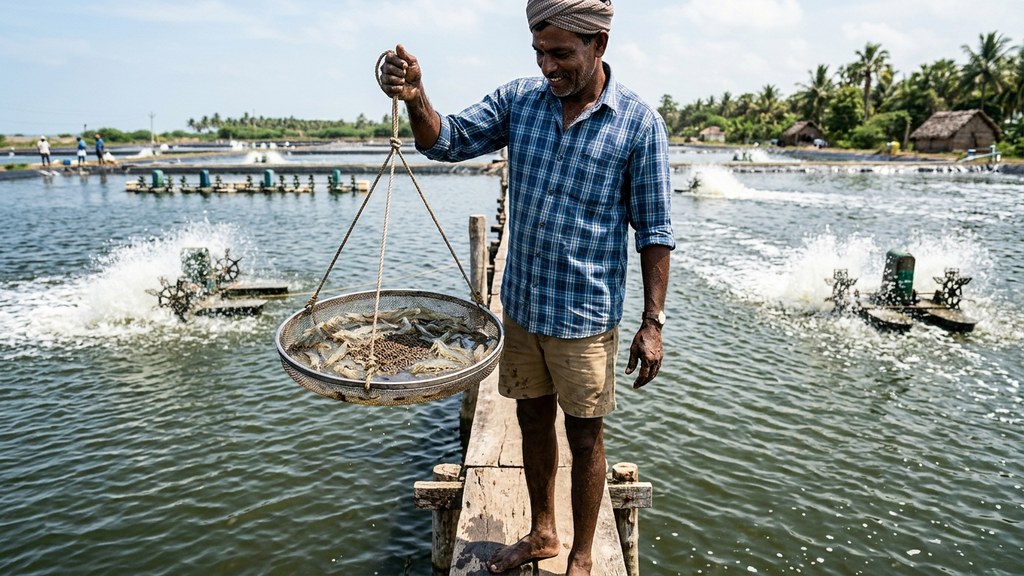
A practical approach to feeding decisions, tray checks, sampling, feed storage and feed conversion.
Feed is one of the largest operating costs in shrimp farming. That makes feed management more than a daily routine: it connects farm economics, shrimp growth, pond condition and waste loading. A feed chart is a useful starting point, but it cannot see what is happening in a particular pond today.
The farmer’s job is to use the chart, then check the shrimp and the pond and adjust decisions with sound technical guidance. Feeding more is not automatically the same as growing more.
Build a routine—and verify it
Use the feed manufacturer’s guidance as a starting reference, considering shrimp size, biomass estimates and the feeding system. As the crop progresses, update the estimate through regular sampling and tray observations. Avoid carrying forward yesterday’s quantity automatically when weather, oxygen, shrimp behaviour or pond condition has changed.
Treat feed trays as a management tool
Feed trays help the team observe consumption and detect changes. Interpret remaining feed together with shrimp size, pellet condition, tray placement, stocking density and pond conditions. One tray may not represent every part of a large pond, so consistent placement and checking matter.
Record quantity offered and remaining; compare trays and ponds; investigate sudden changes instead of adjusting feed blindly; and use tray observations alongside shrimp sampling, water-quality readings and health checks.
Sample shrimp regularly
Regular sampling helps estimate growth and biomass and supports better feeding decisions. Record the date, average body weight or size, sample method and shrimp condition. Compare actual growth with the farm’s plan, remembering that sampling error and uneven distribution can affect estimates.
Feed conversion ratio (FCR) is useful, but it must be interpreted correctly. A simple farm-level calculation compares feed used with biomass gained or harvested over a defined period. Keep the method consistent and include context such as survival, stocking, harvest size, crop duration and partial harvests.
Respond to pond conditions
Low dissolved oxygen, sudden weather changes, heavy rain, temperature extremes, moulting patterns, plankton instability or disease signs can change feeding behaviour. MPEDA’s BMP guidance recommends reducing feeding during conditions such as low DO, plankton crash, rainfall, temperature extremes and disease outbreaks. Check the pond and follow the farm’s technical plan.
Protect feed quality in storage
Keep feed dry, shaded and protected from rain. Store bags on pallets, away from damp floors, with room for ventilation and inspection. Rotate stock and check manufacturing dates, bag integrity, odour, moisture and pests. Keep fuel and chemicals away from feed. Record brand, batch or lot number, quantities received and used.
Do not use feed as a shortcut for medicine
Do not add antibiotics or other pharmacologically active substances unless there is a lawful, professionally directed and specifically permitted basis. Indian authorities publish restrictions and prohibitions on certain substances in coastal aquaculture. Check current CAA notices before using treatments.
Field takeaway
The best feeding decision uses the feed chart plus tray observations, shrimp sampling, water quality and health—not habit alone.
A daily feed record should capture
Pond ID and date/DOC; feed brand, batch and size; quantity offered at each feeding; tray observations and adjustments; relevant water-quality readings; weather or unusual pond observations; and the reason for major feed reduction or suspension.
Better feed management is not about cutting feed blindly. It is about reducing avoidable waste while ensuring shrimp receive appropriate nutrition for crop stage and pond conditions.
- MPEDA – Better Management Practices
- ICAR-CIBA – Shrimp culture and disease management manual
- CAA – Standards